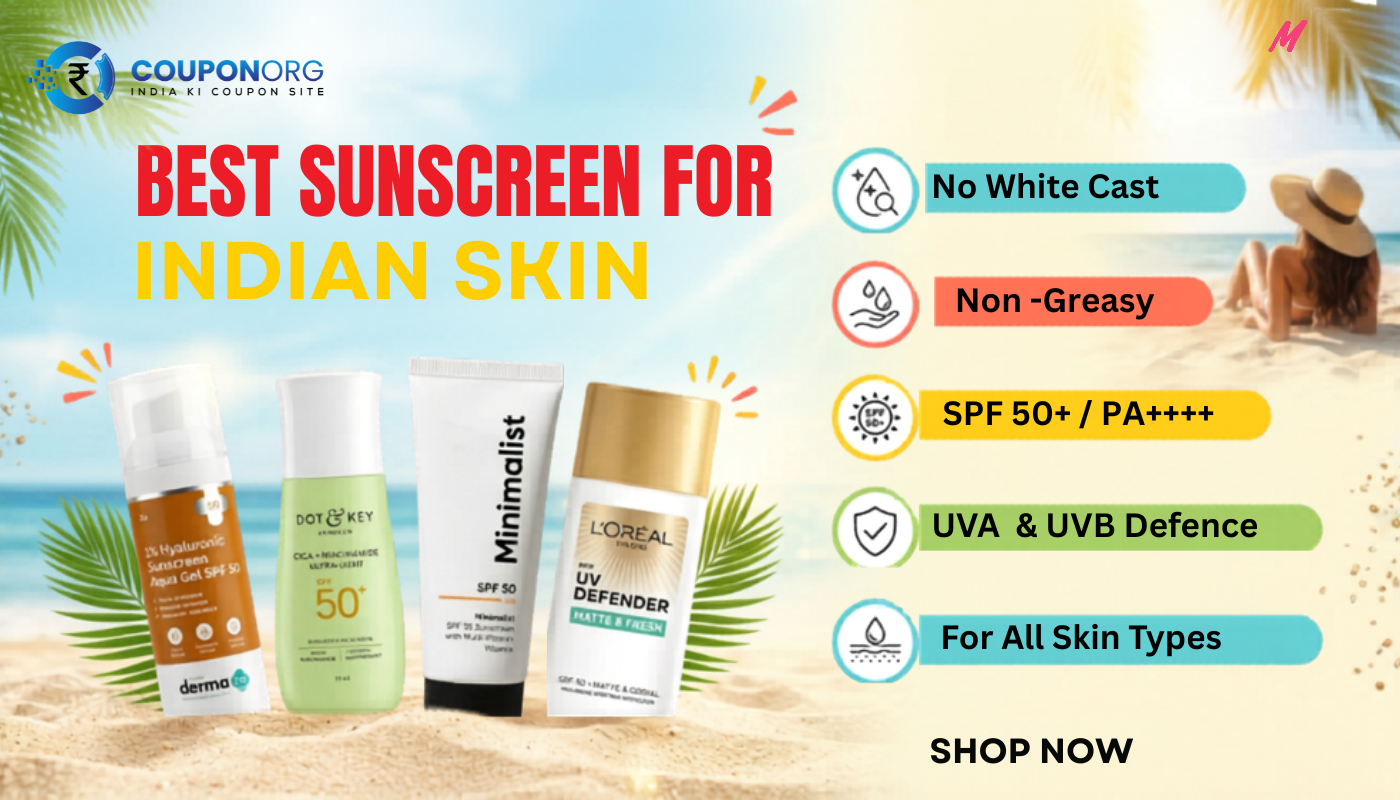
Sunscreen is the one skincare product that dermatologists unanimously agree everyone needs — regardless of skin tone, skin type, age, or gender. Yet it remains the most skipped step in most Indian skincare routines. The reasons are familiar: white cast, heavy texture, greasy finish, or that uncomfortable stickiness in humid weather. For years, most sunscreens available in India were formulated for lighter Western skin tones and simply did not perform well on Indian skin.
Sunscreen shields you from those harmful UV rays, helps slow premature ageing, lowers your chances of skin cancer, and yes, it can keep your skin looking more even. Still, most people either skip it completely, or they use it in this half-hearted wrong way and then wonder why nothing changes.
If you live in India, you already know how harsh the sun can be—especially from March to September. Whether you're in Delhi, Mumbai, or Chennai. A new generation of Indian and international brands has developed sunscreens specifically designed for South Asian skin — formulas that absorb quickly, leave no white cast on deeper skin tones, hold up in heat and humidity, and deliver genuine SPF 50 PA++++ protection. But with so many options out there, choosing the right one can feel confusing. Don't worry — This guide by CouponOrg covers everything you need — what SPF and PA ratings actually mean, which sunscreen works best for your specific skin type & more.
Sunscreen is basically a skincare product that protects your skin from the sun's ultraviolet (UV) radiation. There are two main kinds of UV rays you should care about:
Key Recommendation : For Indian skin conditions, look for SPF 50 PA++++ as your baseline. This combination provides comprehensive protection against both sunburn and the pigmentation and tanning that affects darker skin tones disproportionately.
Indian skin tones can go from light wheatish to deep brown, and honestly that totally changes how you should pick sunscreen. A lot of Western sunscreens tend to leave a white or grey cast on darker skin tones; it just looks off, and then people end up skipping sunscreen completely. That’s why you should look for sunscreens that are either formulated for Indian skin or at least properly tested here — the ones that absorb fast, don’t leave white residue, and still work properly in humid weather.
Dermatologists practising in India, including those affiliated with the Indian Association of Dermatologists, Venereologists and Leprologists (IADVL), generally recommend going with at least SPF 30 or for complete protection SPF 50 sunscreen with PA++++ as the minimum standard for daily use in Indian climate conditions
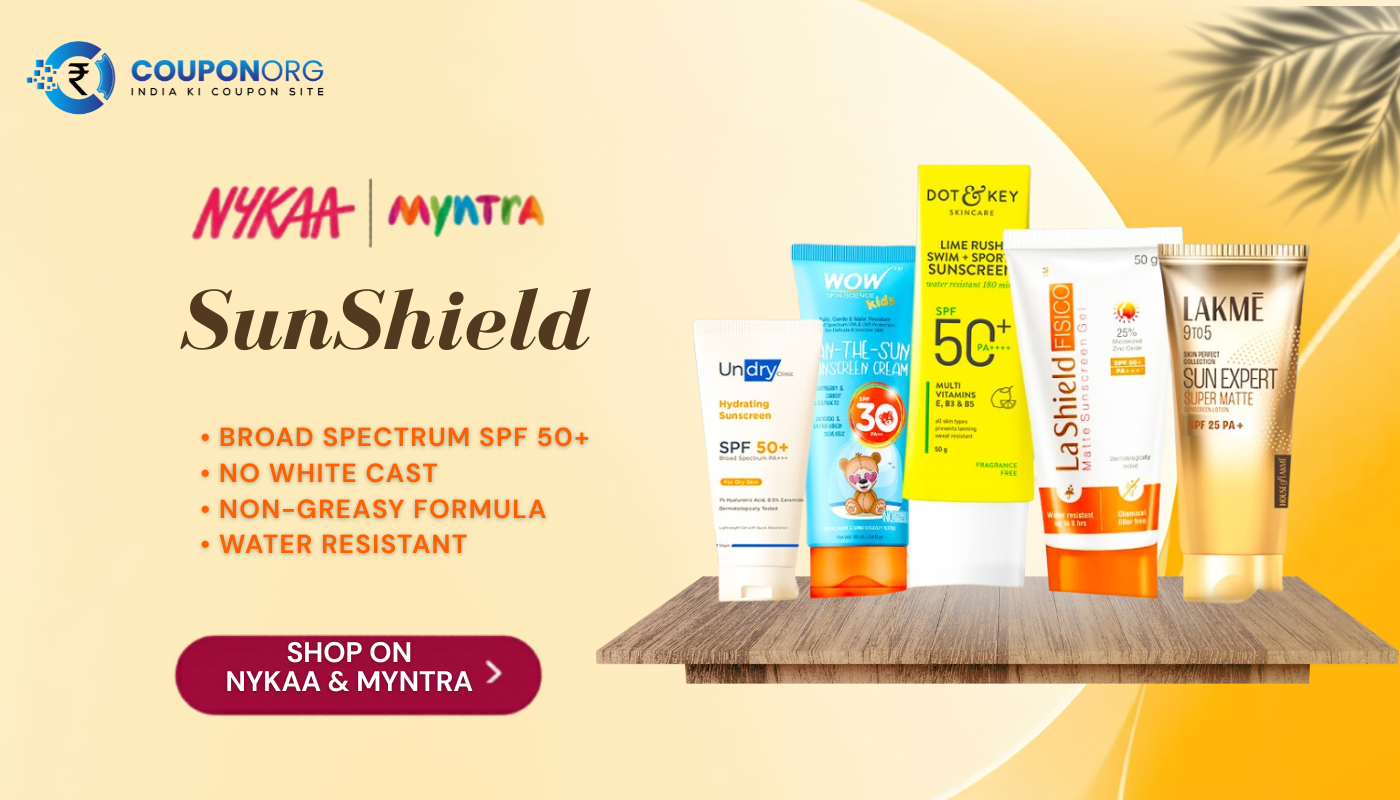
Here’s a complete list of the top sunscreens in India you can buy online, split by where you can shop — Nykaa and Myntra — so you know where to grab them and how to save more using Nykaa coupons and Myntra coupons.
This is probably the most important part of this guide. Picking the wrong sunscreen for your skin type can lead to breakouts, extra greasiness, or dryness, which is why some folks end up just disliking sunscreen in general.
The following sunscreens have been selected based on dermatologist recommendations, verified user reviews, ingredient quality, performance in Indian climate conditions, and availability on major Indian beauty platforms.
If your face starts looking shiny within an hour or two after washing, then you’re dealing with oily skin. Oily skin produces excess sebum throughout the day, and adding a heavy or cream-based sunscreen on top compounds the problem - leading to a greasy, shiny finish that most people find intolerable.
What to look for in a sunscreen:
What to avoid:
Recommended sunscreen brands for oily skin: Minimalist, Deconstruct, and Plum - as they usually have lightweight sunscreens with a matte type of finish. They’re made for oily skin, and the gel textures absorb quickly so you don’t end up with that extra glow. Also, try to catch the best offers on sunscreen during Nykaa sale events for better pricing.
If your skin feels tight, flaky, or rough, especially in air-conditioned rooms, or during winter, then you likely have dry skin. Dry skin needs a sunscreen that does two jobs simultaneously — protecting from UV damage while also providing enough hydration to prevent the tight, flaky, uncomfortable feeling that most standard sunscreens create on dry skin.
What to look for:
What to avoid:
Recommended sunscreen brands for dry skin: Cetaphil's sunscreen range is a top pick for dry and sensitive skin—it's fragrance-free, and it’s deeply moisturizing, like really. Aqualogica and Dot & Key both offer hydrating sunscreens with skin-loving ingredients that feel comfortable through the day—no drama. You can usually find them on Nykaa, so keep an eye on Nykaa offers during beauty sales too.
Sensitive skin reacts way easier to new products, like sometimes even before you expect it. Redness, stinging, itching, or rashes are common signs. So choosing sunscreen for sensitive skin takes extra care, because a lot of chemical filters can cause irritation, and then you’re stuck.
What to look for:
What to avoid:
Recommended brands for sensitive skin: Cetaphil is a sort of universal recommendation from dermatologists for sensitive skin. Pilgrim offers gentle formulas with clean ingredients, not overly heavy ones. Plum’s vegan sunscreens are also well-tolerated by most sensitive skin types, mostly because the formulations stay clean and simple.
You can shop for them on Nykaa, and if you can, use a Plum coupon code on Nykaa to get extra savings.
Combination skin is oily in the T-zone (forehead, nose, chin) but normal or dry on the cheeks. This is actually the most common skin type, and the challenge is finding a sunscreen that controls shine in the oily areas without drying out the drier zones.
What to look for:
What to avoid:
Recommended brands for combination skin: Hyphen and Foxtale work beautifully for combination skin. Their milky gel textures give just enough hydration without piling on to the oilier areas. Dot & Key is another good choice with a more balanced formula.
Hyphen is frequently available on Myntra with buy-one-get-one offers during sales. Use Myntra coupons during the End of Reason Sale or Myntra Beauty Edit for the best prices on these brands.
If your skin doesn’t really feel too oily or too dry, doesn’t react much to most products, and generally behaves well, then you’re probably dealing with normal skin. Lucky you! You’ve got the most flexibility when it comes to choosing sunscreen.
What to look for:
Recommended brands for normal skin: Lotus Safe Sun is a solid, affordable everyday option. Foxtale and Dr Sheth's are pretty good mid-range picks too, with extra skincare advantages. If budget isn’t a big thing, Dot & Key and Aqualogica feel more premium, plus they still give decent protection. Also, you can check Dr Sheth's skincare offers on Myntra to catch discounts.
Sunscreen for acne-prone skin requires the most careful selection of any skin type. The wrong formula can directly trigger breakouts, block pores, or worsen existing acne — which is why many people with acne-prone skin have historically avoided sunscreen entirely.
What to look for:
What to avoid:
Recommended brands for acne-prone skin: Minimalist's sunscreen is highly rated for acne-prone skin; it has niacinamide, and it’s tested to be non-comedogenic. Deconstruct is another really solid choice, built with science-backed ingredients for Indian skin worries, including acne. If you want skincare that feels like one step, this is a great pick. You can find it on Myntra.
Choosing the right sunscreen is only half the job. Most people, honestly, either use too little, missing key areas, or not reapplying — which significantly reduces the effective protection they receive even from high-SPF formulas.
Always apply sunscreen after your moisturiser has been absorbed. Your skincare order should be the following: cleanser → toner (if you use one) → serum → moisturiser → sunscreen. Sunscreen is the last step in your morning skincare routine and should go on before any makeup. Applying sunscreen over still-wet moisturiser dilutes the formula and reduces SPF efficacy.
The most common application mistake is using too little. Dermatologists recommend the two-finger rule for the face and neck — squeeze sunscreen along the length of your index and middle fingers. For the body, approximately one teaspoon per limb and two teaspoons for the torso and back provide adequate coverage. The SPF value printed on the packaging is only achieved when the recommended quantity is applied — using half the amount does not give you half the SPF.
There are also the sneaky areas people skip: ears, the back of the neck, the hairline, around the eyes (choose something gentle there), lips (an SPF lip balm works well), and the back of the hands. These areas receive significant UV exposure and are common sites for sun-induced skin ageing and pigmentation
If you’re using a chemical sunscreen, apply it about 20 minutes before you go out. This gives it time to settle, bind to your skin, and start doing its job. Applying immediately before going outside means you are spending the first 20 minutes without full protection. Building the habit of applying sunscreen while getting ready — before leaving home — eliminates this window entirely.
Sunscreen does not stay perfect all day. Sweating, touching your face, plus UV breakdown over time all chip away at effectiveness. If you’re outdoors, reapply every 2 hours. If you’re mostly indoors, with low sun exposure, reapplying once around midday is usually fine.
When you need to reapply over makeup, go for a sunscreen mist or an SPF cushion so you don’t ruin or smear your base.
Shopping smart is just as important as shopping right. Here's how to get the best deals on sunscreens:
On Nykaa:
On Myntra:
Sunscreen is not some luxury thing — it’s basic skin health. The good news is that finding the right sunscreen has never been easier. Whether your skin is oily, dry, reactive, or acne-prone, there’s usually a formula that feels right, looks fine, and that you’ll actually want to wear every day, not just “when you remember".
Go back to the basics: pick a sunscreen that matches your skin type, apply the correct amount, and make it the last step in your morning routine. Then reapply when it makes sense, like after time in the sun. That’s basically it, for strong, consistent protection.
Think of sunscreen as a long-term investment. The sun damage you prevent today is the dark spot, wrinkle, or uneven tone you don’t have to worry about later, like in ten years. Small daily habits stack up over time — and honestly, this is one habit that really deserves to stick.